Saturday, December 9, 2023

Cycas revoluta

I took this photo in 2006, at Lamorran House, St Mawes, Cornwall, during my early stages of infatuation with exotic gardening.  On a plinth in a gravel circle was a beautiful potted sago palm, Cycas revoluta, with Butia capitata in the background.


At the time my rear garden had a gravel circle surrounded by dense planting and I thought a sago palm would make an excellent centrepiece, replacing the Phormium that currently occupied the spot.


Sago palms, especially big sago palms, are not cheap, so I bought a small one in the hopes of growing it to a decent size.  Unfortunately they're not hardy, even in a sheltered Plymouth garden.  Dreams became dust one bleak winter.

The gravel circle went, partially sacrificed to build a studio for Maria.  Plants grew,  The space left had no room for a Cycas centrepiece.


But I stll had a hankering for a sago palm.  And this time I had a covered canopy between Maria's new studio which trapped the heat from the house and enabled me to provide winter protection for a number of half-hardy plants.  Enter the latest sago palm.  Again a small one, for cost reasons, but after three winters and two growth flushes it's starting to produce a trunk and very reasonable set of leaves.  


Come the summer it moves around the garden, though I don't change the position during the flushing phase to avoid twisted fronds.  Tough plants, they just need regular watering and feeding during the summer growing season, and that little bit of winter protection to survive my Plymouth climate.

Thursday, December 7, 2023

Wintergreen foliage

December can be bleak in English gardens, even ones in the relatively mild maritime climate of the South West.  We may have missed the worst of the recent harsh frosts and snow, though it fell, was fleeting and mostly confined to Dartmoor, but it's still a bit dreary and drab at this time of year.

Yet there is still promise and interest for even the smallest plot.  One such delight lies in brightly patterned wintergreen foliage, produced by perennials that, in the wild, take advantage of leafless winter canopies to bask in what little sun there is before going dormant during the darker months of woodland summers.

Plants such as Cyclamen. C. hederifolium may have flowered back in September but the often ornately patterned leaves persist till spring.  Variation is rife - and certainly adds to winter interest..


Or consider Arum italicum 'Pictum'. Tough and hardy enough to stand up to winter weather, the wintergreen foliage has brightly intricate traceries of silver among a green background.


Both of these can add interest to the winter garden and, because of their summer dormancy, fit nicely among taller growing, summer flowering perennials to provide twelve months interest in even a tiny space.

Tuesday, December 5, 2023

The snowdrop season has already begun

The Garden House, at Buckland Monachorum, Devon, UK, houses an ever increasing collection of snowdrop species and cultivars.  I'm a volunteer there, helping to document the 10 acre garden as the seasons come and go, and one of the later autumn to early spring joys is getting down to (usually wet) ground level to photograph the 350+ collection of species and cultivars. Getting down is fairly easy - getting up again can, at 73, be more problematic.  But the results are worthwhile.

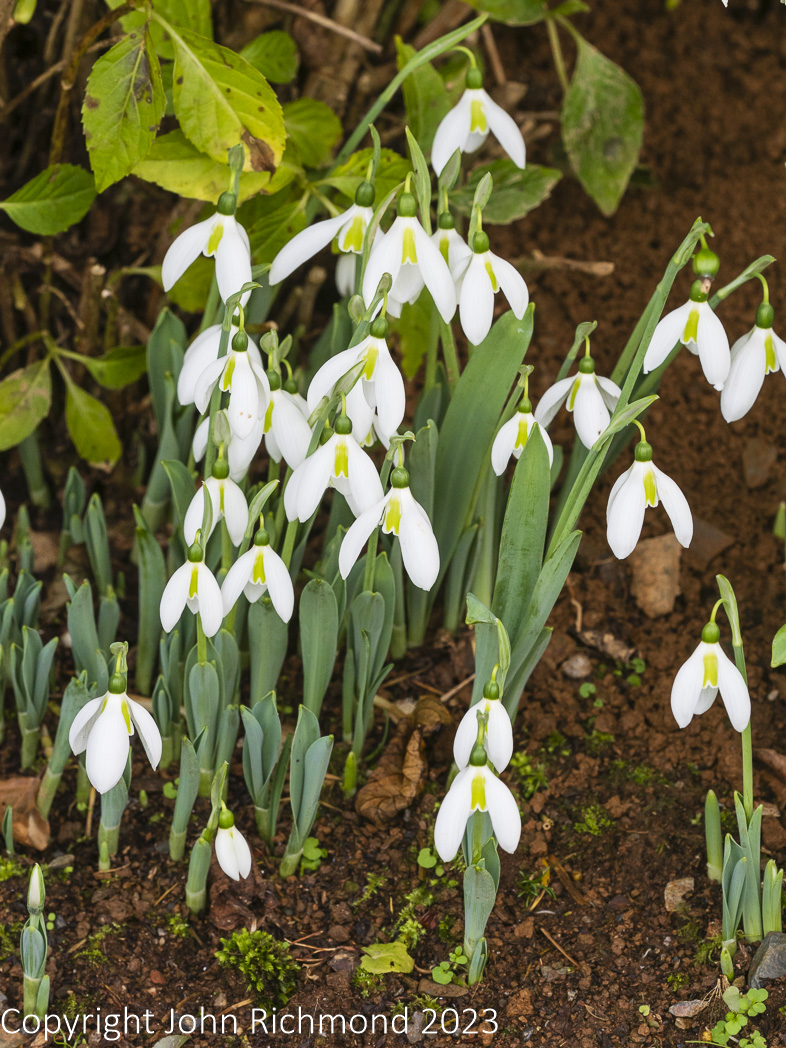
A fair number of cultivars of the glaucous foliaged Galanthus elwesii flower in November and December.  I don't claim to be a snowdrop specialist but it's always enjoyable to see vigorous clumps of, for example, 'Huggett's Round' in full flower among the last of the autumn display'


Equally vigorous is G. elwesii var. monostictus 'Smaragdsplitter', with green flashes on the outer petals.  Under the careful attention of head gardener Nick Hayward and his garden team and our resident snowdrop expert Pat Eaton this is now flourishing in mutiple sites in the garden


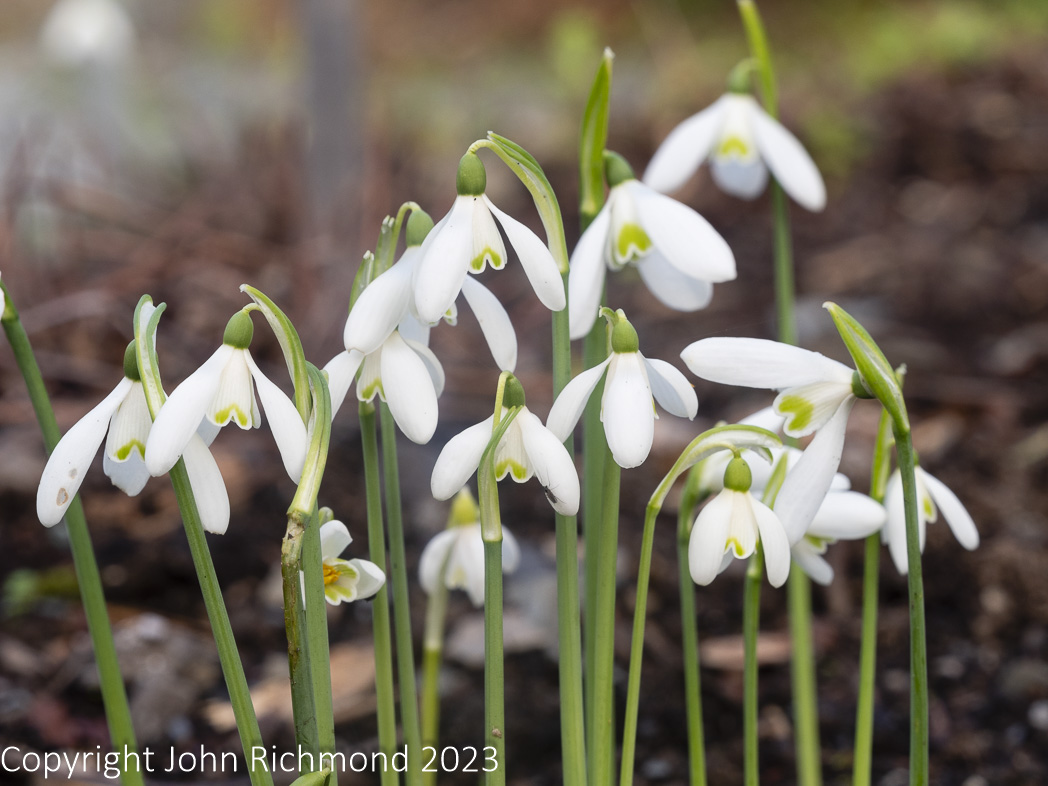
G. reginae-olgae is anothe autumn flowering species, never better than opening wide to bask in the low angled sun.


 As well as the species we grow a number of early flowering hybrids, including this rather lovely, yellow marked G. 'Turkish Delight'


These are but a fraction of the collection.  Most will be on display between mid January and March 2024 when The Garden House snowdrop festival takes place